Physella acuta - Bladder Snail Magyarul / Hungarian


- Scientific name: Physella acuta
- Synonyms: Haitia acuta (Draparnaud, 1805), Physa acuta (Draparnaud, 1805), Physella heterostropha (Say, 1817), Physa globosa (Haldeman, 1841), Physella integra (Haldeman, 1841)
- Common name: Bladder Snail
- Group: Invertebrates
- Distribution: Worldwide. It can be found in many countries as an invasive species.
- Size: 1 cm
- Biotope: Found in shallow, warm, slow-flowing rivers and lakes.
- Social behavior: Peaceful, can be kept with other species.
- Diet: Omnivorous; In nature they feed on decaying vegetation and green algae.
- Breeding: Easy
- Tank: Minimum 20 litres
- Population: 4-5 snail for 20 litres
- Decoration: Larger stones, roots and densely planted aquarium.
- Temperature: 10-28 °C
- pH: 7.2-8.5
- Hardness: 7.0-20.0 dGH
- Lifespan: 1-2 years
Description: The shell of the Bladder Snail - unlike most of the snails - is sinistral, which means that if the shell is held with the aperture facing the observer and the spire pointing up, then the aperture is on the left-hand side. The shell is 7-12 mm high and 7-10 mm wide, with 4-5 whorls with a pointed apex. The last whorl of the shell is very much expanded and with the aperture it can reach the 3/4 of the whole shell height. The vacant shell has a tan color and almost trasparent, so the mottled blue-grey body of the snail can be seen through the shell, which has black and tan spots and blotches. The foot is lighter with fine black pigment spots. Bladder Snail is an air-breathing, very adaptable snail, and it is able to withstand polluted waters, and is often introduced inadvertently into new habitats by humans, where it is often recorded as a serious pest. This snail can often come into fish tanks as a pest snail hidden away in plants and will quickly multiply in number.
These snails are hermaphrodites capable of self-fertilisation.
Bladder Snail lays oval eggs in small jelly clutches. These clutches are usually containing 20-50 eggs, which hatch after 15-20 days, but it depends on water temperature. The initial size of the small snails are 0.5-0.7 mm, and they reach maturity after 17-18 months.
Sources:
http://www.marinespecies.org/aphia.php?p=taxdetails&id=234093
http://idtools.org/id/mollusc/factsheet.php?name=Physella%20acuta
http://www.animalbase.uni-goettingen.de/zooweb/servlet/AnimalBase/home/species?id=2192
https://www.mdfrc.org.au/bugguide/display.asp?type=5&class=21&subclass=&Order=57&family=216&couplet=0
https://hu.wikipedia.org/wiki/T%C3%B6mzsi_h%C3%B3lyagcsiga
https://en.wikipedia.org/wiki/Physella_acuta
http://www.theaquariumwiki.com/wiki/Physa_acuta
Last update:

Hasonló vízparamétereket igénylő fajok

Ameca splendens
(Butterfly splitfin)
(Butterfly splitfin)
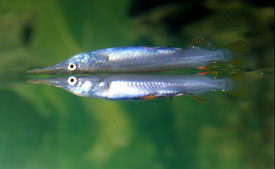
Dermogenys pusilla
(Half beak)
(Half beak)

Heterandria formosa
(Least Killifish)
(Least Killifish)

Poecilia reticulata
(Guppy)
(Guppy)

Poecilia velifera
(Sailfin molly)
(Sailfin molly)
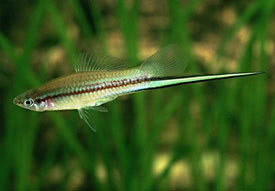
Xiphophorus helleri
(Swordtail)
(Swordtail)

Xiphophorus maculatus
(Platy)
(Platy)

Xiphophorus montezumae
(Montezuma swordtail)
(Montezuma swordtail)

Xiphophorus nezahualcoyotl
(Mountain swordatail)
(Mountain swordatail)

Xiphophorus variatus
(Variegated platy )
(Variegated platy )
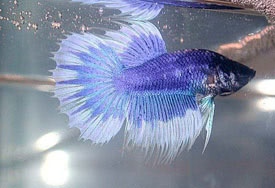
Betta splendens
(Betta, Siamese fighting fish)
(Betta, Siamese fighting fish)
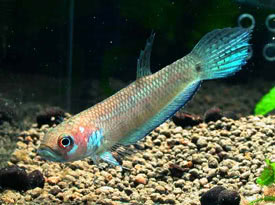
Betta unimaculata
(One spot mouthbrooder)
(One spot mouthbrooder)
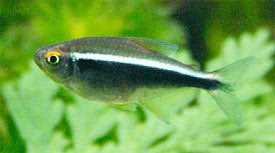
Hyphessobrycon herbertaxelrodi
(Black neon tetra)
(Black neon tetra)
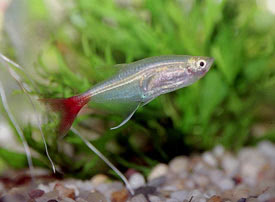
Prionobrama filigera
(Glass bloodfish, Glass bloodfin)
(Glass bloodfish, Glass bloodfin)
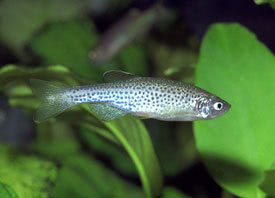
Danio rerio var. frankei
(Leopard danio)
(Leopard danio)
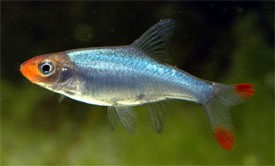
Sawbwa resplendens
(Rummy nose rasbora)
(Rummy nose rasbora)
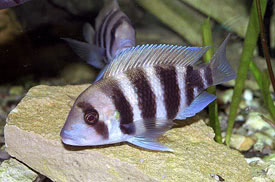
Cyphotilapia frontosa
(Frontosa)
(Frontosa)
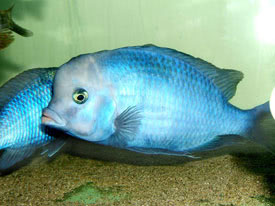
Cyrtocara moorii
(Moori, Blue dolphin cichlid)
(Moori, Blue dolphin cichlid)

Paraneetroplus synspilus
(Flower horn fish)
(Flower horn fish)
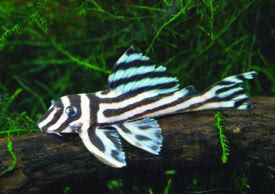
Hypancistrus zebra
(Zebra pleco)
(Zebra pleco)

Synodontis multipunctatus
(Cuckoo Synodontis, Multi-spotted synodontis )
(Cuckoo Synodontis, Multi-spotted synodontis )
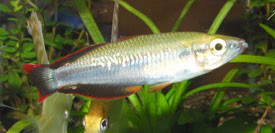
Bedotia geayi
(Madagascar rainbowfish)
(Madagascar rainbowfish)

Brachygobius xanthozonus
(Bumblebee goby)
(Bumblebee goby)
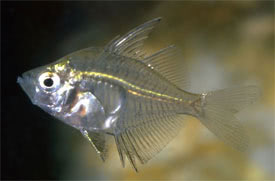
Pseudambassis ranga
(Indian glass fish)
(Indian glass fish)

Monodactylus argenteus
(Mono, Fingerfish)
(Mono, Fingerfish)

Scatophagus argus
(Scat, Spotted scat)
(Scat, Spotted scat)

Tetraodon fluviatilis
(Green pufferfish)
(Green pufferfish)
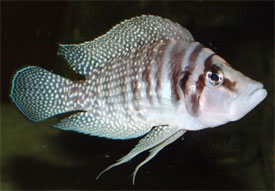
Altolamprologus calvus
(Pearly lamprologus)
(Pearly lamprologus)

Altolamprologus compressiceps
(Compressed cichlid)
(Compressed cichlid)
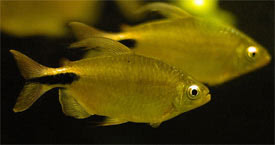
Bryconalestes longipinnis
(Long-finned characin)
(Long-finned characin)

Priapella intermedia
()
()
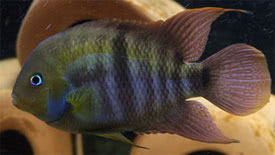
Cryptoheros sajica
(T-bar cichlid)
(T-bar cichlid)

Cyprichromis leptosoma
(Slender cichlid)
(Slender cichlid)
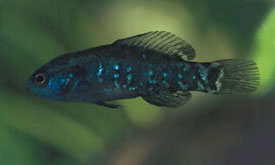
Elassoma evergladei
(Everglades pigmy sunfish)
(Everglades pigmy sunfish)
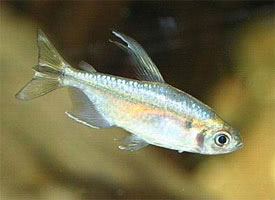
Alestopetersius caudalis
(Yellow Congo Tetra)
(Yellow Congo Tetra)

Nymphaea daubenyana
(Dauben's waterlily)
(Dauben's waterlily)
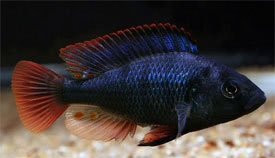
Haplochromis nubilus
(Blue Victoria Mouthbrooder)
(Blue Victoria Mouthbrooder)

Sinibotia robusta
(Kansu Loach)
(Kansu Loach)

Brachyplatystoma tigrinum
(Zebra Shovelnose)
(Zebra Shovelnose)

Melanotaenia lacustris
(Lake Kutubu Rainbowfish)
(Lake Kutubu Rainbowfish)
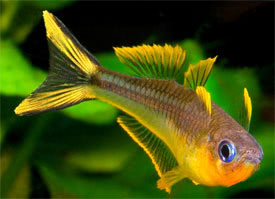
Popondichthys furcatus
(Forktail rainbowfish)
(Forktail rainbowfish)

Phalloceros caudimaculatus
(One-spot Livebearer)
(One-spot Livebearer)
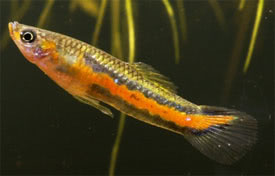
Poecilia parae
(Para molly)
(Para molly)

Stigmatogobius sadanundio
(Knight Goby, Fan Dance Goby)
(Knight Goby, Fan Dance Goby)

Monodactylus sebae
(Seba Mono)
(Seba Mono)

Allotoca dugesii
(Opal allotoca, Bumblebee Goodeid)
(Opal allotoca, Bumblebee Goodeid)

Procambarus clarkii
(Red Swamp Crayfish)
(Red Swamp Crayfish)

Cherax peknyi
(Zebra Crayfish)
(Zebra Crayfish)
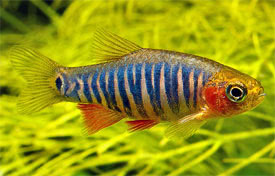
Celestichthys erythromicron
(Emerald Dwarf Rasbora)
(Emerald Dwarf Rasbora)

Xiphophorus pygmaeus
(Pygmy swordtail)
(Pygmy swordtail)